How Dice and Chance Shaped the Modern Table Game
The story of craps history and origin is less a neat timeline than a working ledger of chance, migration and table-side maths. I have spent two decades modelling paylines and hit frequencies, and the same probability discipline that governs a well-tuned slot appears here in a different guise. For an Australian reader, the practical takeaway is simple: the maths behind the dice has always been the product, not the theatre around it.
Where the Dice Actually Came From
Medieval bone dice and street-side hazard tables are the rough ancestors of what we now call craps, though the polished casino version is a much later refinement. The game travelled with soldiers, sailors and traders, picking up local names and house rules long before any written rulebook settled the matter. As Benjamin Thompson, Strategy Director, Tasman Gaming Partners, puts it, “The early forms were less a single game than a family of risk exchanges, and that flexibility is exactly why the mechanics survived.” From a design standpoint, that adaptability matters: a table game that can absorb regional rule variations without breaking its underlying odds is far easier to license and operate at scale. The arithmetic of two six-sided dice gives you a fixed distribution of outcomes, and every later variation is really a negotiation over which results the house pays on and which it keeps.
Today, that same spirit of chance lives on in digital forms, where players can find the best online casino bitcoin at https://bitcoincasino-site.org/en-AU/. The core appeal remains unchanged, even as the tools of the trade have shifted from bone to bytes.
| Detail | What it means for the player |
|---|---|
| Core mechanics | Two dice, fixed probability distribution, house edge built into payout ratios |
| Rule evolution | Street hazard roots, later casino standardisation of pass and don’t pass lines |
| Table design | Pace, shooter rotation and bet layout all shape the effective cost per session |
| Skill element | Limited to bet selection and bankroll pacing, not outcome control |
How the Modern Table Took Shape
The version that stuck in casinos did so because it balanced spectacle with a predictable house edge, not because it was the fairest game on the floor. As Daniel Wilson, Marketing Director, Laneway Interactive Media, notes, “What sold the table was the shared rhythm of the shooter and the crowd, which made the maths feel social rather than solitary.” That social layer is real, but it does not alter the distribution of results, and anyone building or evaluating a table needs to separate the show from the edge. In practice, the key design decisions were which proposition bets to keep, how the odds on the pass line would be priced, and how fast the table could turn over action without losing coherence. A slower table can feel friendlier, yet it also changes the cost per hour of play, which is the figure a disciplined player should actually track.
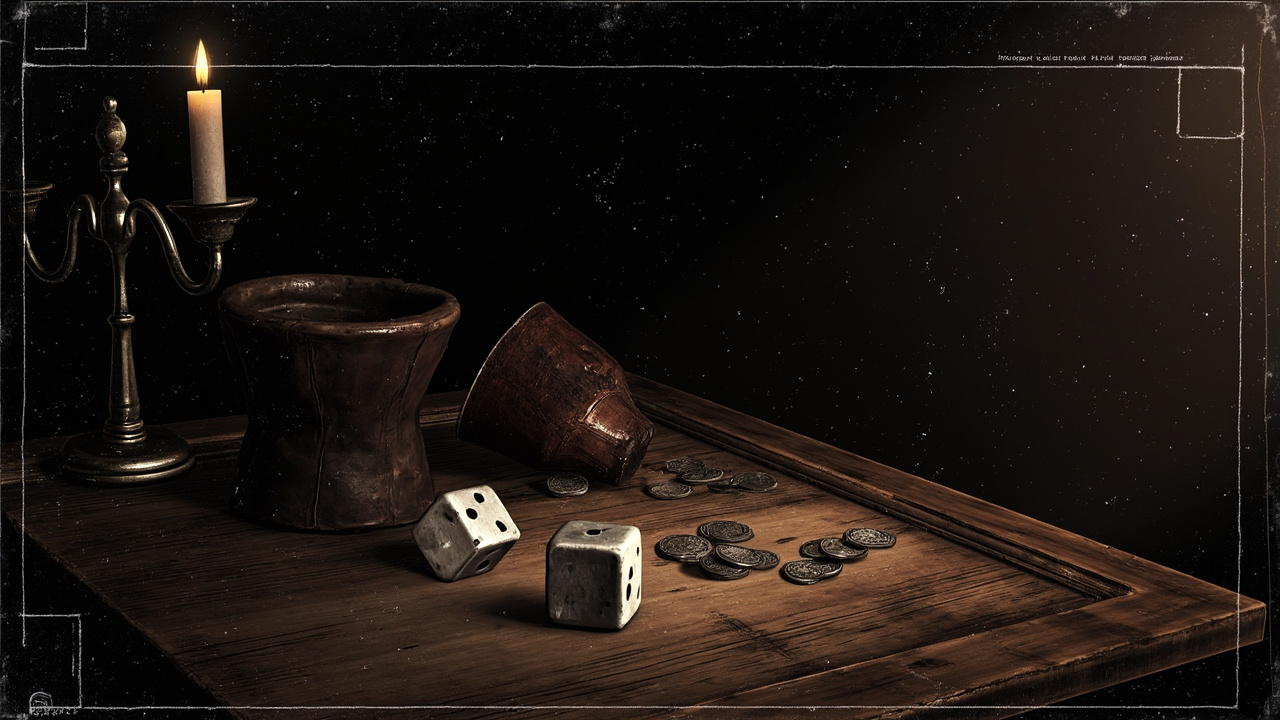
For an ordinary Australian reader, the everyday parallel is a footy tipping contest run over a season rather than a single weekend. You can pick your entries carefully and manage how much you commit each round, but the underlying variance is still doing most of the work, and no amount of ritual around the table changes the long-run distribution. That is the part I always flag when a product team wants to dress up a high-edge layout as if it were a skill game: the ritual is entertainment, the edge is the product, and the two should never be confused in the terms you set for yourself.
Who the Table Suits and Who It Does Not
Craps history and origin point to a game built for people who enjoy communal pace and are comfortable with a fixed mathematical edge rather than a hidden one. It is not a quiet, solitary pastime, and it rewards players who can stick to a small set of lower-edge options instead of chasing the loudest bets on the layout. As Lachlan Henderson, Head of Analytics, Southern Capital Advisory, observes, “The players who last are the ones who treat the table like a budgeted session, not a search for a lucky streak.” That mindset matters because the table’s appeal is partly its energy and partly its transparency: you can see the dice, the bets and the odds, which means you can also see where the cost of play accumulates.
For visitors comparing options, including those looking at a best online casino bitcoin setup for convenience, the same discipline applies: the delivery method changes how quickly you can place action, but it does not rewrite the distribution or the edge attached to each wager. A sensible fit is someone who likes the shared rhythm, understands that the house edge is built into the payout structure, and plans https://danishcode.com/how-a-multiplier-wild-changes-your-pokies-spins/ a session around time and bankroll rather than a target result. If that is not your style, the table’s energy can become expensive entertainment very quickly, and no amount of history or tradition changes that arithmetic.
The throughline from the earliest hazard tables to a modern layout is that chance was always the product, and every rule change was a trade-off between pace, appeal and edge. If you enjoy the shared rhythm and can keep your betting to the lower-cost lines, the game can be a solid session of structured play. If you are chasing a feeling that the table owes you a win, the maths has never supported that idea, and it still does not.
Leave a Reply